
Hi! I’m here to talk to you about the dead. However, I’m not here to talk about necromancy (well, sort of), mediumship, or most modern cultural practices. I’ll point out resources, but I’m not the one to tell you how to practice el Día de los Muertos, for example.
My experience comes from three places, specifically: My Buddhist experiences with Segaki/Sejiki, my research on Greco-Roman rituals around the dead, and modern witchcraft books about working with the dead. I can’t promise the books in the bibliography are perfect, but they can at least give you enough information to know where to go from here.
That said, this article is to convince you to work with the dead this season. We’re approaching the spooky season, when many cultures already pay attention to their dead. You can, too!
Benefits:
There’s a lot of dead spirits around and you’re related to many of them one way or another
They have an inherent connection to you
They are human shaped, and easier to comprehend
They tend to live ‘closer’ to us humans than some spirits (sky spirits live in the sky, obviously)
They’re also not inherently scary - and how to manage the scary ones is well documented
Methods of interaction are also well documented, and there’s a wide variety of them
These interactions can be as lightweight or intense as you desire, and can last a day, a month, or for as long as you desire
Basic Offering Advice
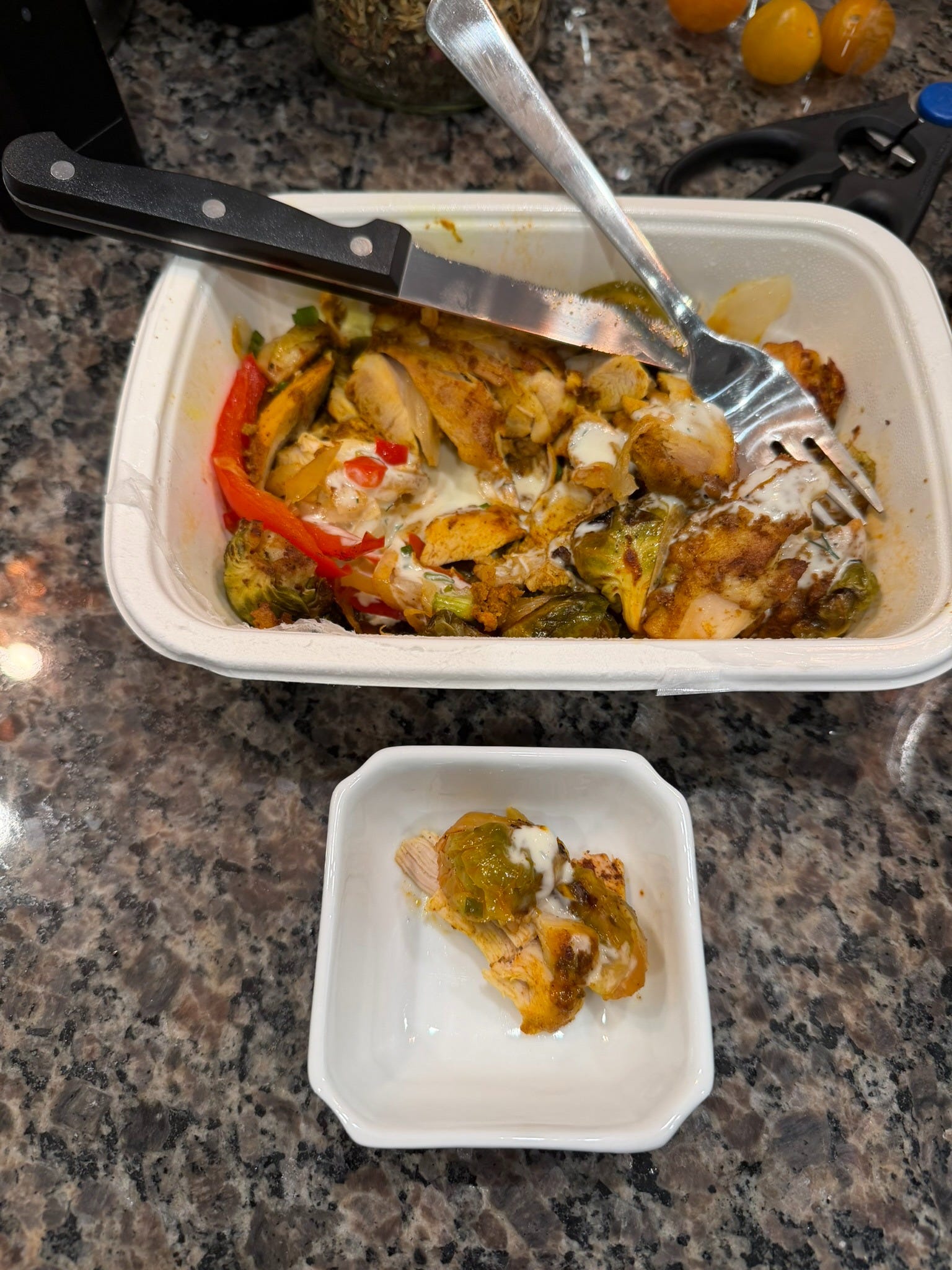
Let’s start with the lightest weight. If you ever do a general offering like I do, it’s easy to add a line. I sometimes offer a piece of my breakfast, optionally with a lit candle, to all of the spirits that I work with. You can offer a glass of water, or a stick of incense, or whatever works for you personally.
The whole prayer is:
‘I dedicate this offering to the spirits of this house and of this land; those who protect my family and help me with my work; those we have loved and lost, those who have come before. May you be pleased and at peace.’
The italics are doing the work - mostly focused on the ancestors, but lightly including the dead in general. If you have specific ancestors you want to include you can call their names as well.
Ancestral Altars
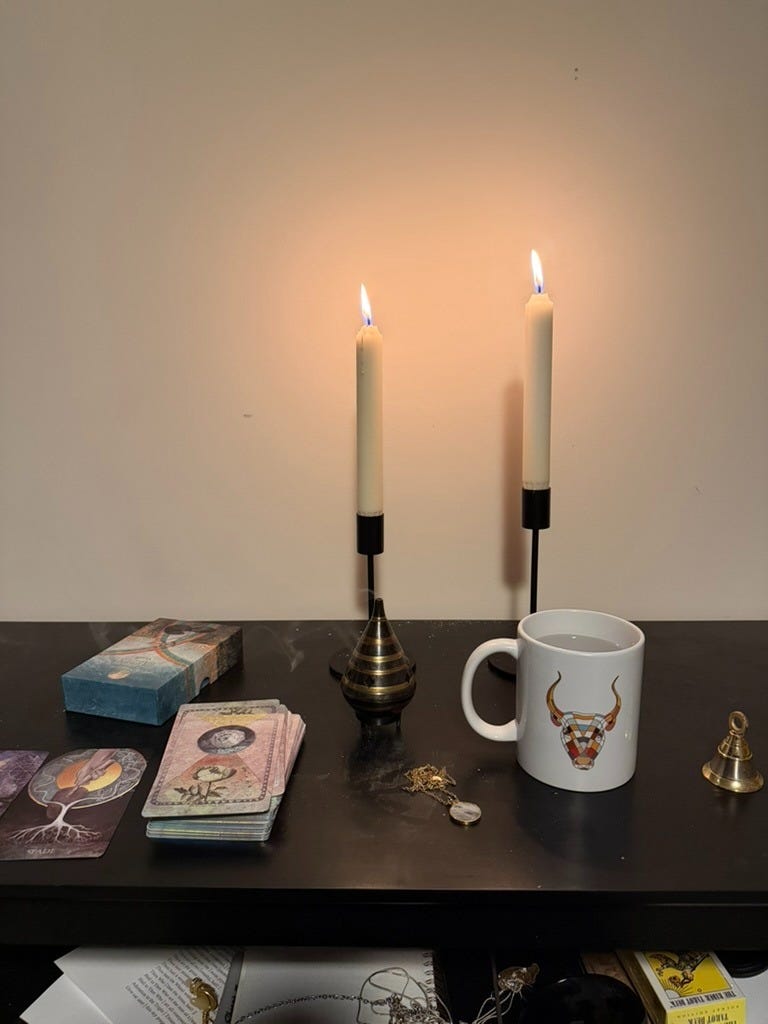
For a little more effort, you can make an ancestor altar or shrine. For the ancestors you want to honor, add objects they owned, photos or images that remind you of them, and their own dedicated offering / candle space. I sometimes dedicate a tarot or oracle deck to that altar to encourage communication.
Who are your ancestors?
The first and most obvious answer is: those dead who are related to you, near or distant. The farther you go back, the more the pool grows.
However, if you don’t know any family or don’t like them, consider other kinds of ancestral lines. If you have a career or area of study that you love, those who worked or contributed to the field before you are an ancestral line. Those who taught or wrote books on your spiritual practice are also an ancestral line. Beyond that, you can just call the dead who have something in common with you, although at this point we’re beginning to wander slightly from ancestors into the dead in general.
Reciting Ancestral Lineages
The next thing you can do is spend some time just speaking the names of your ancestors out loud. The size of the list isn’t important, it can be done in front of an altar or not, but this activity encourages a different kind of intimacy with your ancestors.
I don’t use my own family line - too many problematic recent dead - so I stick with my ‘other’ ancestral lines.
Here’s part of my astrological ancestral line - when I want to honor them, I set up ‘non-burning’ offerings in front of that part of my bookcase, or put the printed copy of the list on the altar - I would pull the books out to make an altar if I wanted to do something big, but the list is long, so generally they stay where they are. I recite the names while giving some kind of offering in their honor.
Here’s part of my astrological ancestral list.

The scribes of Enuma Anu Enlil, for the Babylonian celestial omen series, the oldest systematic body of celestial divination the art draws on.
Berossus, for the Babyloniaca, and for the ancient tradition that he brought Chaldean astrology to the Greek world.
Hipparchus of Nicaea, for discovering precession, compiling the first known systematic Greek star catalogue, and bringing Babylonian astronomical parameters into Greek astronomy.
Nechepso and Petosiris, for the lost foundational text cited as authority by Valens, Firmicus, Hephaistio, and others.
Teucer of Babylon, for the major surviving treatment of the decans and paranatellonta, transmitted through Rhetorius and Abu Ma'shar.
Thrasyllus of Mendes, for the Pinax, and as court astrologer to Tiberius.
Marcus Manilius, for the Astronomica, the earliest surviving extended astrological treatise, in five books of Latin verse, left incomplete.
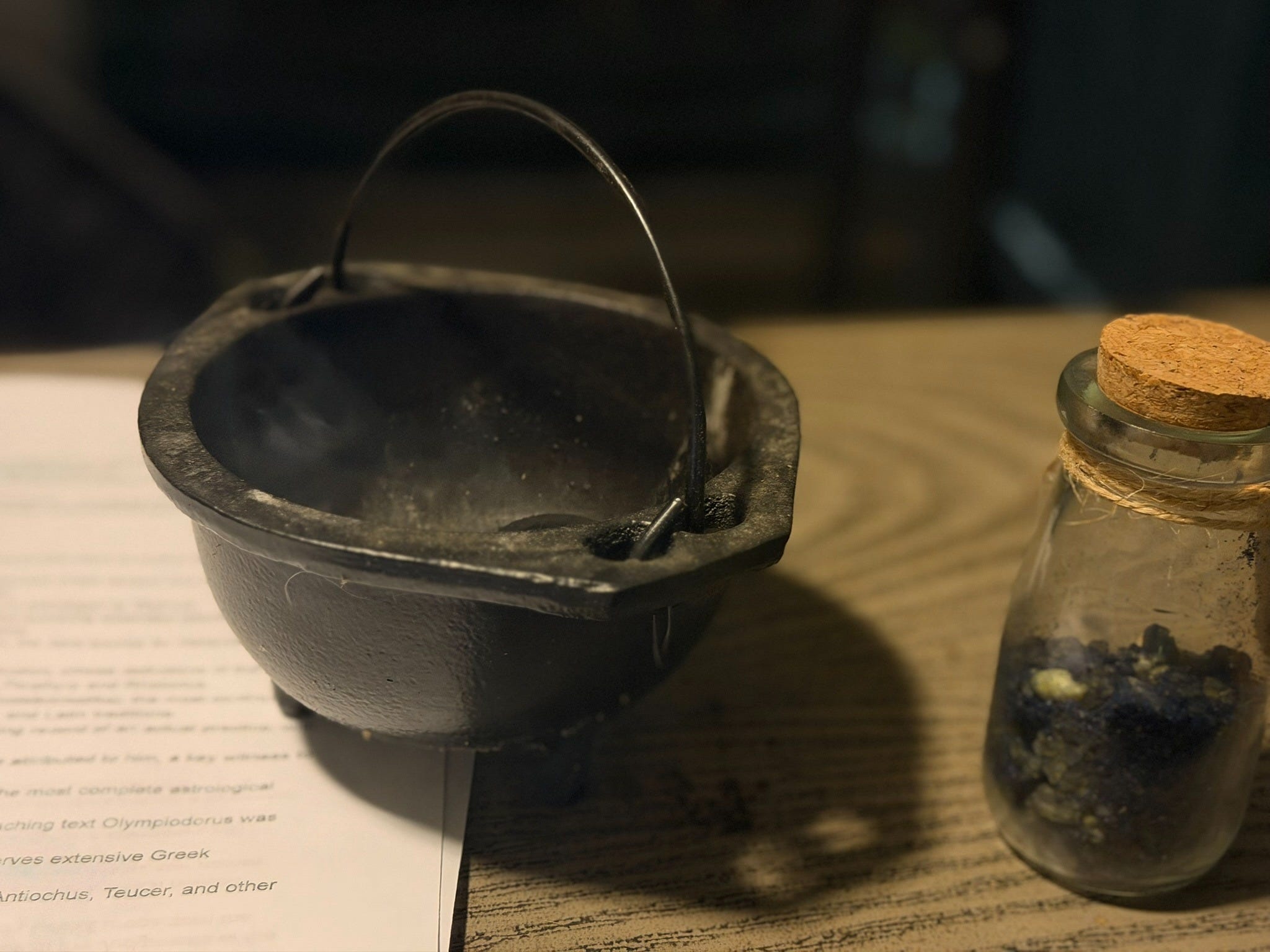
If you want a little more activity, you can bow, offer a pinch of incense or a slight pour of liquid into the ground with each name on your list - it depends on how long your list is. My full list is broken up into sections, and at the start of each section I can offer something while reciting the names.
Caveat Time
Before we move into the more intense ‘workings’ of ancestors, I have to give you some warnings.
First, we can consider some of our ancestors to be ‘unhealed’ - not willing to let go of prejudices that they held in life. You can try to work it out with them through communication, but my theory is that life is short and I can’t fix everybody, so I work around them or ward against them, depending on how angry they are.
Second, ancestors often come with baggage (especially those of the Caucasian persuasion). They did things in life that may have had lasting, multi-generational consequences. If you think you’re getting interference because of ancestral karma, look at the appeasement ritual below for relief.
Appeasement Ritual
If you want to work on appeasement, or easing the familial karmic burden, the offering work will be slightly more complex. I would always recommend you bring multiple kinds of offerings (water, light, incense, food, burnable goods, etc) so that the table feels abundant, but if your space or budget is more limited, you may want to do a daily small offering over a week, or incorporate them into whatever ‘group offering’ you do (see the first activity, above). You can even, with intention, skip any ‘mystical’ offering and just go donate some money or time to a cause that would heal that wound.
Here’s my example: One side of my family is Mormon, and those ancestors were highly involved in missionary work around the world. If I want to do spell work with these folks, I start with an appeasement of victims. Here is how it goes:
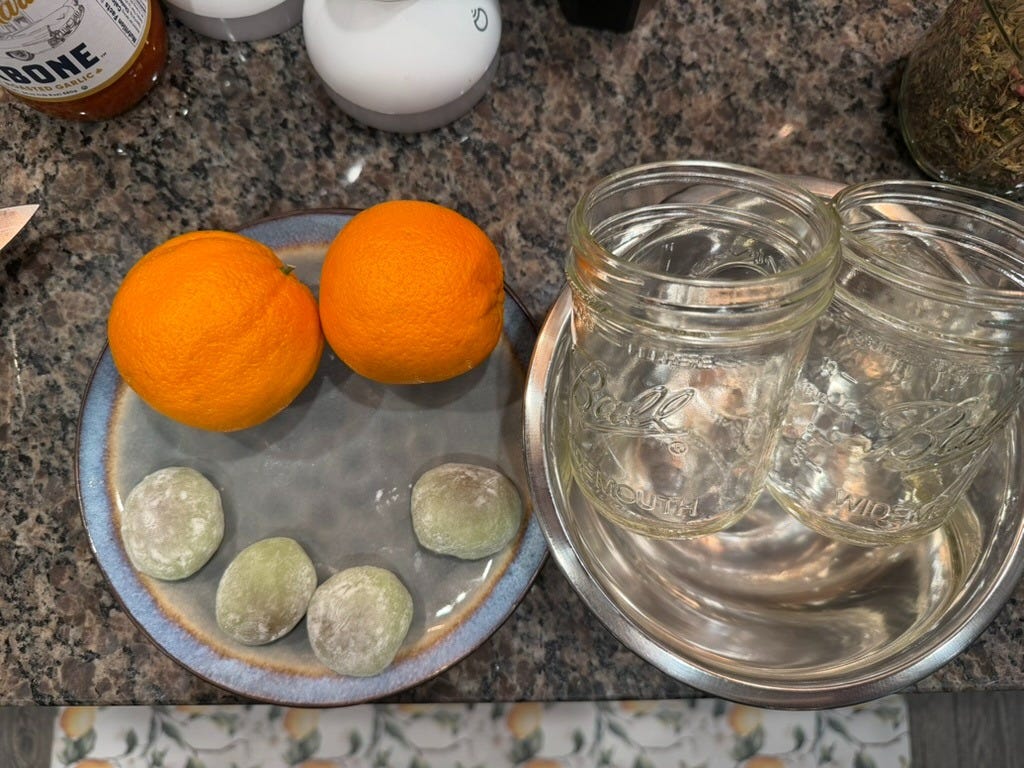
After ritual setup, I call both my ancestors and their victims forward and do a special offering. I offer them a bowl of water for washing, food, drink and light, and I encourage my ancestors to join in on serving them. When this part is done, I invite the appeased to stay or go at their preference and continue to the main work.
Helpful Gods
If you WANT to work with the dead in ritual but you’re feeling nervous, there are several deities that can assist, giving you more distance from the dead and a more familiar starting point for the witchy types. I’ll be advising from the Greco-Roman pantheon, BUT most cultures have gods with similar roles.
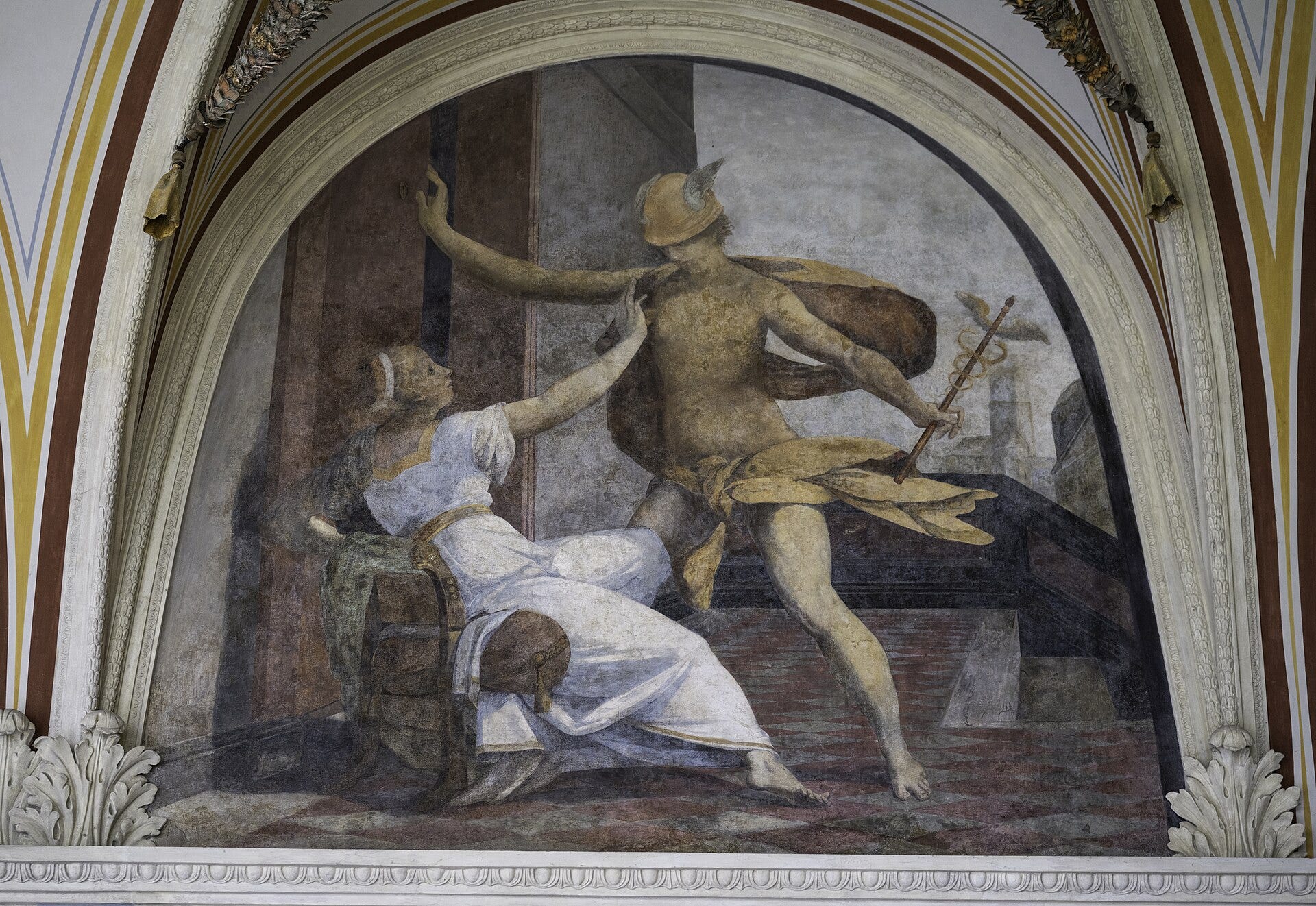
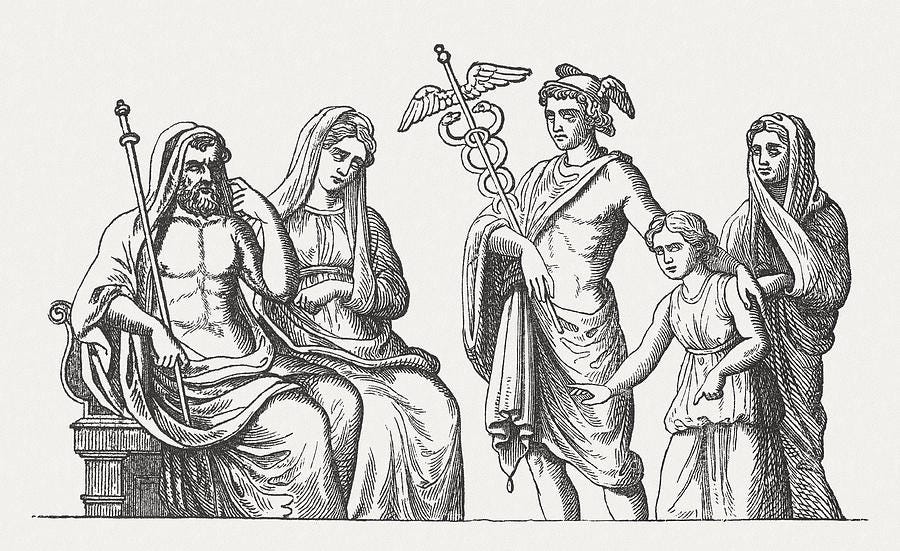
If you want to visit with the dead, I recommend looking for a psychopomp like Hermes Chthonios. This is the epithet of Hermes when he travels through the underworld, and the aspect that escorts Persephone to and from her mother. He can escort spirits up for a conversation, or carry messages if you want even more distance.
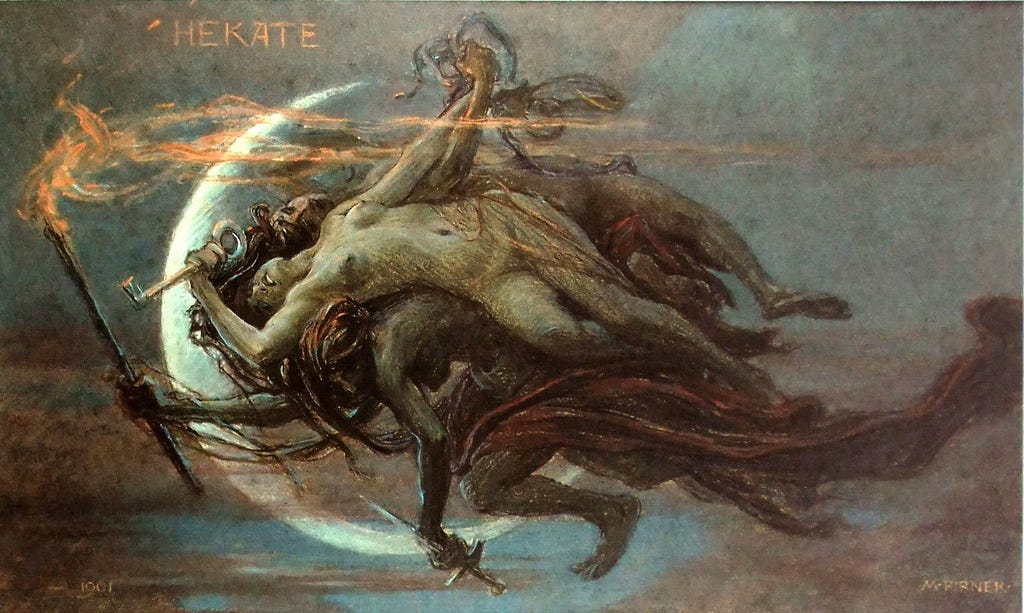
You can also look for someone that leads the active dead, like Hecate. She has several epithets involving the dead that you can use, including ‘Anassa Eneroi’ (Queen of the Dead) and ‘Nerteron Prytanin’ (Mistress of the Dead). She is a goddess of many epithets, and you can check them out here: https://www.patheos.com/blogs/matauryn/2017/07/19/many-epithets-hekate/.
I personally don’t recommend underworld specific deities like Hades if you want to work with the dead. They’re interested in maintaining their kingdom and our actions may feel disruptive to them. Stories of humans petitioning Hades don’t often go well.
Of course, if you already have a relationship with Hades (or Persephone), they may be more of a help - but I wouldn’t start a relationship with this kind of work.
Ritual Works
Whether you’re ready to work with the dead directly or via an intermediary, it’s time to consider exactly what kind of work our ancestors are good for. What work can they do in a ritual, for you? What exists beyond honoring or appeasement?
Ancestors are hugely invested in your success. Do you want advice? The elders may have advice. You want them to go ‘haunt’ someone as revenge? They’re often down for that. You can invoke them directly and petition them for whatever you need. I wouldn’t generally ask them to inhabit objects for you (my sigils are spirit houses, for example, so I don’t do sigil work with the dead), but like any good friend they’re happy to run errands for you.
Warding
A great example is doing warding work; Claude Lecouteux’s books mention multiple times how the dead would get ‘stuck’ at doorways, or even be buried purposefully below the outer threshold. The dead are deeply enmeshed with the idea of liminality, so putting them in charge of a liminal space like your front or back door can be very helpful (and very spooky for unwelcome guests).
Envoys and Messengers
If you need something more powerful than an ancestral spirit, you can ask them to persuade other spirits to help you, or at least stay out of your way. Invoke them first on the list, and then ask them to help invite the other spirits in and make them amenable to your cause. I have had ancestors offer to do work for bigger spirits on my behalf, to gain favor (don’t offer this to the bigger spirits, your ancestors are not your slaves).
From here we can move away from ancestors specifically and talk of the dead in general - you don’t have to be related to the dead to work with or for them.
Work in Service to the Dead
If you’re interested in spiritual ‘charity’ work, the hungry or restless dead have a lot of work available. These spirits are similar to our victims above, but more a victim of being forgotten and untended - so the ritual work will look similar to that appeasement, but the attitude will be different. This will be the main part of my practice this month, and I am treating it like volunteering at a food bank; my goal will be quantity, not quality, interactions.
Strangers for Petty Work
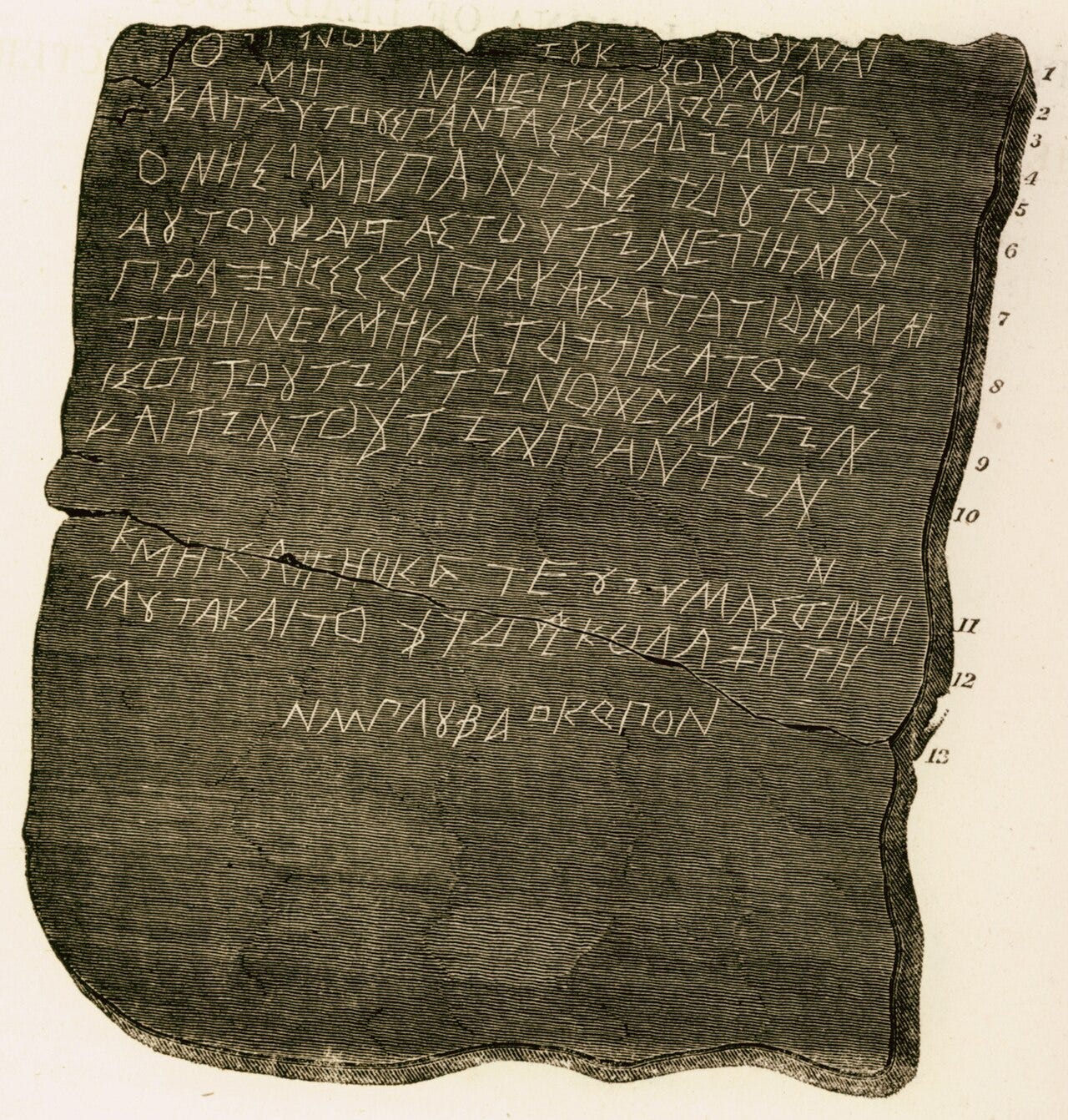
There is also a rich practice of asking for the unrelated dead to help - we dig up lead curse tablets from graves that ask for help from individuals they clearly don’t know (Johnston’s Restless Dead talks about these, and you can search up many articles that discuss ancient curse tablets). Apparently even the unrelated dead were willing to engage in messages or mischief on your behalf.
Graveyard Visits
A graveyard is attached to a church, while a cemetery is a general, public burial location. I’m using graveyard in the article as the ‘generic’ term, but accuracy is good, no?
Graveyard work also comes with a warning. Although modern sources discuss it, there are some arguments that this practice really originates with closed/initiatory practices and were lifted wholesale without acknowledgement. I don’t know if this is true, so take any advice here with a grain of salt, and consult divination before doing anything too wild.
These are the tales I have been told:
First, when entering a graveyard, a witch needs to appease the guardian spirits. Bring two coins and leave them at the gate - think of it also as helping a spirit pass on.
Second, you need to remember to respect the space you’re in. Try not to walk over graves directly, be polite rather than demanding, and don’t deface anything. You are in the dead people’s domain, not your own. Also, try not to disturb any mourners around; that’s an easy way to get kicked out or banned.
Third, come prepared with offerings. A flask filled with whiskey or coffee can be discreetly poured at a grave; incense is harder to hide. Bits of food can be crumbled and left in the grass, but make sure you’re not bringing anything that might harm the local wildlife.
Fourth, ask permission, and be willing to be told no. Although spirits are generally willing, not all of them will be - see the warnings around the ancestral dead.
Fifth, if you can, do research ahead of time so you can find the right kind of dead. You might find politicians, soldiers, mothers, etc - each will have their own specialty they can help you with.
Sixth, if you’re going to take dirt, don’t take much, and definitely leave an offering in the dirt as you take it. Bring a small container to bring it in and a spoon to grab it, and take as little as you can. Alternatives to dirt: clip a little grass at the grave, or take a small rubbing of the stone; both disturb the grave less and have a similar anchoring effect, if you’re seeking direct contact with this spirit later. Graveyard dirt can have other uses, so I understand if you need to grab it, but consider other options if possible.
Seventh, consider mundane appeasement. If you plan to be a ‘semi-regular’ visitor of a graveyard, see if the managers need volunteers to pick up trash and keep the area clean. If not, see if they have a program that can take donations, or if you can bring them baked goods occasionally. Also look up programs like Find a Grave and volunteer to record any missing entries for what is now ‘your’ graveyard.
Thinking of cultural appreciation vs. appropriation. Many cultures have rituals around their dead. Some cultures are very open and willing to share, some would prefer it to stay ‘within the family’, as it were. If it’s the kind of ritual any outsider can attend and participate in, then feel free to take and adapt. This is especially true when the work isn’t calling on any spirits connected to the culture. I pull from research heavy history books, my family’s history and other traditions I’ve taken part in in my life. If you see something outside of your own experience that calls to you, I recommend you find someone in real life who can invite you in and teach you not just what you do, but why - because that’s the part that often gets missed. Remember to give credit where credit was due.
Astrological Advice for Working with the Dead
Finally, if all of this sounds amazing but you don’t know where to start, we can always look at your astrological chart. You will need to have your birth time and location, but it can be very helpful for either shaping the work you might want to do or just confirming that you’re on the right track.
The 4th house and/or the location of your IC are the places where we look. These represent your roots, your parents, and your intergenerational trauma.
The sign of the 4th house is going to give the basic mood or themes of your ‘root work’, or work with your ancestors. The IC is the peak point in that, and if it’s not in the 4th house it will be bringing in the other house’s sign as an additional mood/theme for you.
Once you know the signs, the planetary rulers of those signs, and their placement in your chart, will give you more direction on ‘how’ you should be doing the work. These are your bosses or managers for the work, so their preferences should be followed (at least when you’re getting started).
Then, look to see if you have planets in the 1-2 houses/signs you’ve identified. If so, these are additional supports - not in charge, but supernatural peers that can help you if you lean toward what they’re good at.
Finally, you can look at aspects to that IC point. Any planet or axis on your chart is going to give you more information about what you should do, especially in regards to how that work feeds into or is interfering with other parts of your chart (ie, you).
Let me give you an example, with my chart.
My 4th house is Taurus, ruled by Venus, and my IC is in my 5th house, Gemini (ruled by Mercury). The moon is also present in Gemini, but the closest aspect for the IC is actually the north/south node axis. This sounds dense, so let’s break it down so you can see what value we can derive.
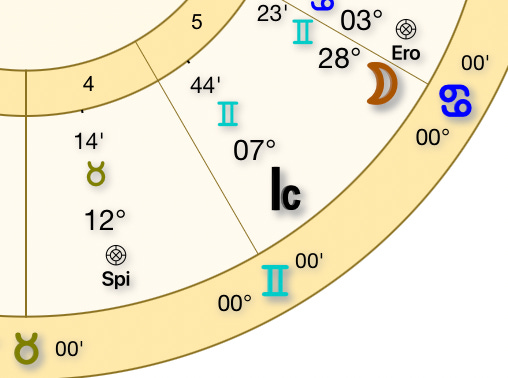
How I would read this:
4th house Taurus is practical and homey, so I’m reading this as doing this working at home, with comforting, physical items. Venus rules it, and is in Virgo: she’s going to want a lot of research and for me to come correct. Why? Venus in Virgo struggles with perfectionism and getting stuck ‘preparing’ while never acting. I want to honor that without getting stuck myself.
My IC line is in 5th house Gemini, and Gemini is giving a heavy conversational aspect - an emphasis on communication may be preferred for this work, and the 5th house is going to encourage me to be creative about it - engaging in writing may also fit (this article may, or may not count). Mercury rules Gemini and is also in Virgo, where he rules; he cares about discovering how all things connect together, problem solving and organizing information - but he’s also naturally a little bit of a trickster. Connecting different kinds of practices together into a coherent whole may work with this Mercurial nature (Greek and Buddhism are intertwined in my plans). As Mercury is connected to travel and he and Hermes (and therefore Hermes Chthonios) are connected, maybe going for a visit ‘down below’ myself or getting some divine help to do so is also in the cards.
The lunar support does encourage a mystery aspect - the Moon can bring in divination or dream work if I want it, and as the Moon is a shapeshifter (like Mercury), I’ll do best if I can hold my plans loosely in my hands and allow for change. I won’t expect my plans to remain the same all month.
Finally, that aspect with the nodes - squaring the north node and being squared by the south node, means that this stuff is interfering with and being impacted by my fate line. This is not going to feel like a comfortable ‘just hanging out’, but needs to be taken seriously as ‘growth practice’ - I may have skipped some work on the IC/MC line in the past (earlier in life or past life, depending on beliefs), and so doing work with the IC is going to involve a lot of ‘make up’ work. Doing appeasement work seems to fit right in with that.
So my plans are appeasement (IC/North and South Nodes), I’ll not travel to any graveyards for it (Taurus - and a decision I’m making because of the chart). I really don’t want to work on communication with the dead this year (Mercury/Gemini/Moon), and I also don’t know if I’ll be up for the Hermes work (Mercury/Moon), but I’ll keep it in mind. Just because a chart says you CAN do something, doesn’t mean you should. Maybe I’ll try to just have a conversation with Mr. Chthonios? We’ll see.
If you’re curious about how your astrological chart gives advice on spiritual practice, I do offer that service! We’ll spend 30 minutes looking at your chart or looking at tarot to help you either broadly (how to get started) or specifically (creating a ritual to fit your circumstances). https://app.acuityscheduling.com/schedule.php?owner=33470287&appointmentType=70059978
Conclusion
Hopefully I’ve convinced you both that working with the dead is worthwhile AND given you some inspiration to give it a try. Maybe you just do a few offerings this season, maybe you completely fold them into your spirit work, or maybe just something in between. I hope you find something you can do that feels worthwhile and honors the start of this dark season.
May you also be pleased, and be at peace.
Bibliography
If you enjoy reading accessible books about pre-Christian and early Christian beliefs across Europe, I cannot recommend Claude Lecouteux enough. My favorite book of his is The Tradition of Household Spirits: Ancestral Lore and Practices, which does cover ancestral worship but also a variety of other household spirits European ancestors worked with. I also found The Return of the Dead: Ghosts, Ancestors, and the Transparent Veil of the Pagan Mind interesting, especially about the shift in practices over time and theories on why.
Sarah Iles Johnston is a fantastic source for Greek practices, and her book Restless Dead: Encounters between the Living and the Dead in Ancient Greece is just so good. So much of what I do is from this book.
If you want to get to know Hekate in all her forms, including her power over the dead, Jason Miller’s Sorcery of Hekate (https://strategicsorcery.net/sorcery-of-hekate/) has a lot of value (there is also a small amount of graveyard work present in the course, but it’s not the focus of the work).
If you just want to see her giant list of epithets, here’s Mat Auryn’s Hecate epithet list: https://www.patheos.com/blogs/matauryn/2017/07/19/many-epithets-hekate/.
If you want to see how a modern western Buddhist Segaki/Sejiki (feeding of the hungry dead) ceremony reads, Bright Way Zen has a public copy of their ceremony text online at https://brightwayzen.org/wp-content/uploads/2020/11/Segaki-Festival-BWZ-Zoom-2020.pdf. This includes prayers and chants you could adapt if you like. If you want to better understand why western temples moved the ceremony to fit western ‘death’ holidays, this is a great article from Dharma Rain: https://dharma-rain.org/on-segaki/.
One of the most recommended ‘starter’ books for ancestor work is: Honoring Your Ancestors: A Guide to Ancestral Veneration by Mallorie Vaudoise. It’s good for getting a perspective of the basics and some sample rituals to get you started.
If you have trouble creating your own prayers, The Big Book of Pagan Prayer and Ritual by Ceisiwr Serith covers basically everything you might ever need.